
This page tracks historical ice-in and ice-out dates for Long Lake in Park Rapids, Minnesota, along with long-term trends based on decades of observations by LLAA volunteers. The record provides insight into seasonal patterns and changing lake conditions over time.
Looking for current ice conditions?
Visit our Is Long Lake Frozen? page for the latest Long Lake ice status and seasonal updates.
About the Long Lake Ice Record
LLAA volunteers have tracked ice-in and ice-out dates on Long Lake for decades, creating a long-term record of seasonal conditions on the lake.
The observations are coordinated by Sharon Natzel with help from observers around the lake, who monitor conditions to determine when Long Lake freezes over and when it becomes completely ice-free in spring.
FUN FACT: According to HJ White Ice Out was May 5th in 1935.
How Ice-In and Ice-Out Data Is Collected
Long Lake’s size and deep-water areas can make determining an exact ice-in date challenging. Ice-out is generally easier to identify. Observers around the lake compare conditions to determine the official dates each year.
The Long Lake ice record was originally maintained by Bella and John Sanders, with observations from Bill Anderson near the deeper north end of the lake. Vern Campbell later worked with the observations to develop the statistical record and control charts. Katie Hoffman now uses the most recent data to update the graphs shown below.
Long Lake Ice Out Contest
LLAA holds an Ice Out Contest each year, inviting members and their families to guess when Long Lake will become completely ice-free. The monthly newsletter announces contest details and the entry deadline. The closest guess earns bragging rights, and participants are entered into a prize drawing at the Annual Meeting.

Minnesota DNR Ice Data
Additional historical ice-out information is available from the Minnesota DNR:
Minnesota DNR Median Ice Out Dates
Minnesota DNR LakeFinder – Long Lake (Lake ID 29-0161-00)
The charts and statistics below summarize long-term ice-out and ice-in trends on Long Lake based on historical data collected by LLAA volunteers.
Ice Out Data
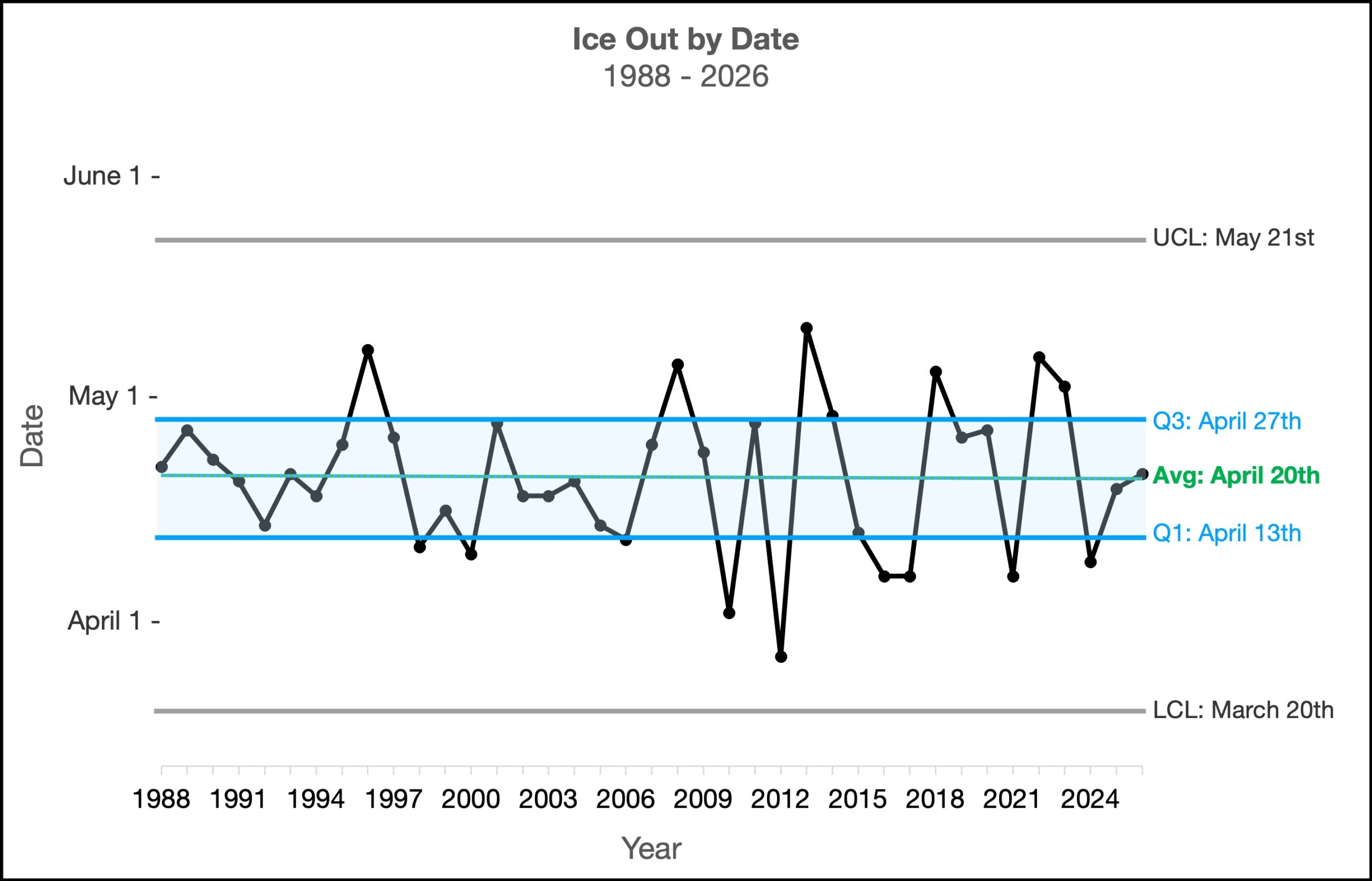
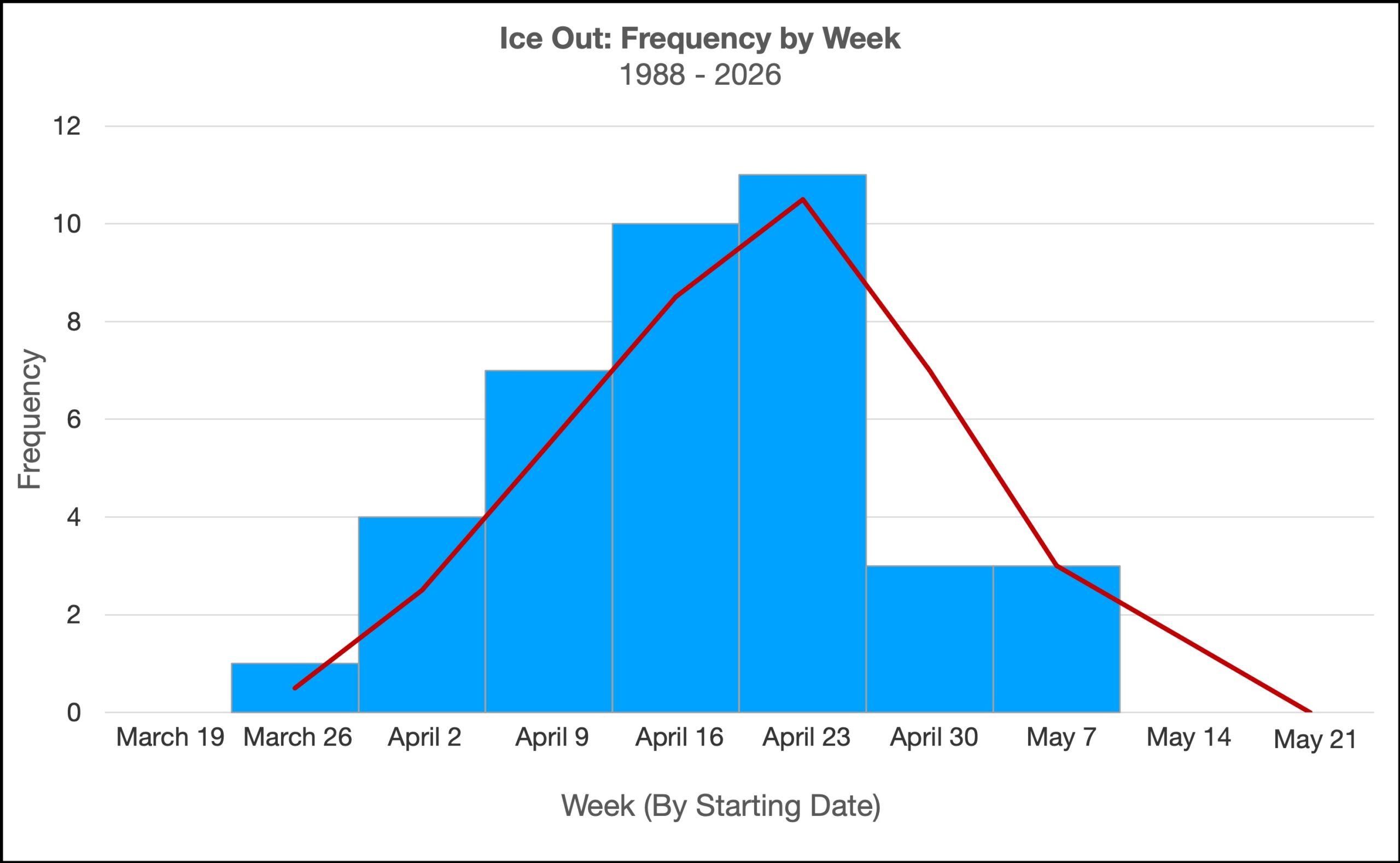
Long Lake’s average ice-out date is April 20, and the long-term trend has remained relatively flat over the period shown.
Based on the historical record:
- About half of Long Lake ice-out dates fall between April 13 and April 27.
- The historical range shown by the statistical control limits extends from approximately March 20 to May 21.
Click here to see chart of dates used to make these Ice-Out graphs.
Ice In Data
Long Lake’s average ice-in date is December 14. Recent years show some tendency toward later ice-in dates, although the variation remains within the range that could occur naturally in the historical record.
The charts below show annual ice-in dates and how frequently ice-in has occurred during different weeks.


Ice Data - Raw Data
The tables below provide the historical ice-out and ice-in dates used in LLAA’s long-term ice record and trend analysis.
Ice Out Data
| Ice Out | Year |
|---|---|
| 1987 | |
| 4/21 | 1988 |
| 4/27 | 1989 |
| 4/23 | 1990 |
| 4/20 | 1991 |
| 4/13 | 1992 |
| 4/21 | 1993 |
| 4/18 | 1994 |
| 4/25 | 1995 |
| 5/7 | 1996 |
| 4/26 | 1997 |
| 4/11 | 1998 |
| 4/16 | 1999 |
| 4/9 | 2000 |
| 4/28 | 2001 |
| 4/18 | 2002 |
| 4/18 | 2003 |
| 4/19 | 2004 |
| 4/14 | 2005 |
| 4/12 | 2006 |
| 4/25 | 2007 |
| 5/5 | 2008 |
| 4/24 | 2009 |
| 4/2 | 2010 |
| 4/28 | 2011 |
| 3/26 | 2012 |
| 5/11 | 2013 |
| 4/29 | 2014 |
| 4/13 | 2015 |
| 4/6 | 2016 |
| 4/7 | 2017 |
| 5/5 | 2018 |
| 4/26 | 2019 |
| 4/26 | 2020 |
| 4/7 | 2021 |
| 5/7 | 2022 |
| 5/3 | 2023 |
| 4/8 | 2024 |
| 4/19 | 2025 |
| 4/21 | 2026 |
Ice In Data
| Ice-In | Year |
|---|---|
| 12/20 | 1987 |
| 11/28 | 1988 |
| 12/4 | 1989 |
| 12/20 | 1990 |
| 11/23 | 1991 |
| 12/16 | 1992 |
| 12/16 | 1993 |
| 12/12 | 1994 |
| 11/28 | 1995 |
| 11/27 | 1996 |
| 12/22 | 1997 |
| 12/21 | 1998 |
| 12/21 | 1999 |
| 12/10 | 2000 |
| 12/21 | 2001 |
| 12/3 | 2002 |
| 12/11 | 2003 |
| 12/14 | 2004 |
| 12/29 | 2005 |
| 12/14 | 2006 |
| 12/8 | 2007 |
| 12/8 | 2008 |
| 12/13 | 2009 |
| 12/8 | 2010 |
| 1/14 | 2011 |
| 12/17 | 2012 |
| 12/6 | 2013 |
| 12/24 | 2014 |
| 12/30 | 2015 |
| 12/16 | 2016 |
| 12/21 | 2017 |
| 12/22 | 2018 |
| 12/10 | 2019 |
| 12/15 | 2020 |
| 12/21 | 2021 |
| 12/17 | 2022 |
| 1/12/24 | 2023 |
| 12/18 | 2024 |
| 12/14 | 2025 |
Provided by the Long Lake Area Association