Long Lake Stewardship Program – Protecting Water Quality

Lakes are Minnesota’s favorite places. They are our heritage and our way of life. There is a direct connection between water quality and economic sustainability. The Long Lake Stewardship Program encourages property owners to adopt shoreline practices that help protect water quality and habitat.

Long Lake is a priority lake for protection and has been identified as such in various water plans like the Crow Wing River Comprehensive Watershed Management Plan and the Hubbard County Local Water Management Plan. For this reason the LLAA has partnered with the Hubbard County Soil & Water Conservation District to implement the Long Lake Protection Plan.

The Long Lake Stewardship Program is a key part of the Long Lake Protection Plan. The goal of the program is to maintain or implement shoreline stewardship practices on developed lake properties to help protect water quality and habitat. Property owners can receive helpful suggestions specific to their shoreline through a complimentary site visit. If your property meets the stewardship guidance, we will recognize your efforts with a Lake Steward sign that you can proudly display.

Thank you for helping to protect Long Lake.

Help protect Long Lake
This work is made possible by LLAA members and donations.

Become a member or pay your annual dues
Donate to support lake stewardship

Why Shoreline Stewardship Matters

This short video explains how shoreline stewardship protects water quality, fish habitat, and property values. Many of these same practices are part of the Long Lake Stewardship Program.

What is the Stewardship Program

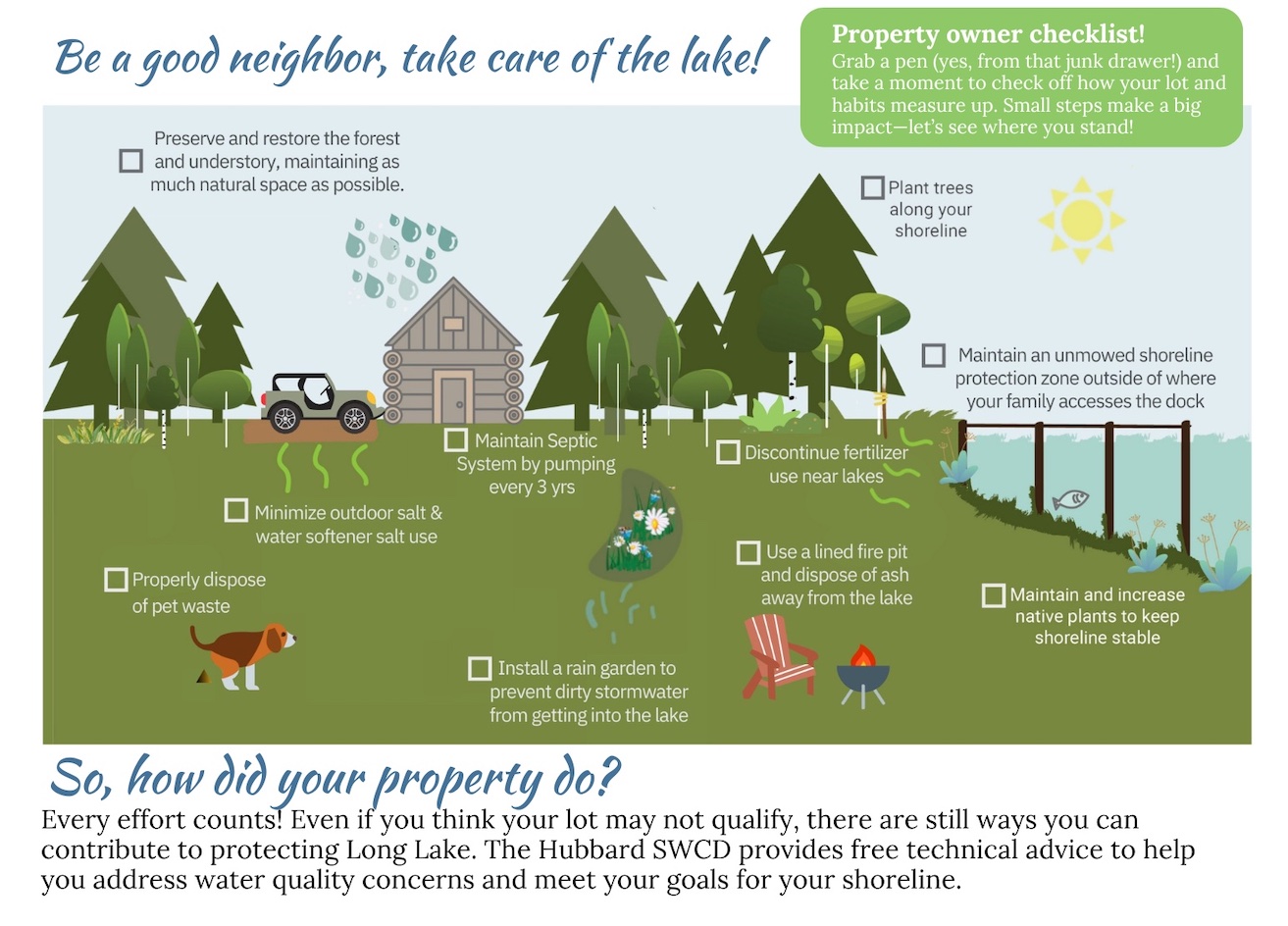
Property owners on Long Lake can participate in the Long Lake Protection Program by adopting shoreline stewardship practices like the ones shown above.

Stewardship Practices

Review your property and see how many of the stewardship practices below are already in place.

  • Bluff management and erosion control:
    Bluffs should be covered with native vegetation and show no signs of erosion. At the top of the bluff, maintain at least a 10-foot buffer of native vegetation or rain gardens to slow stormwater runoff. If erosion control is needed, use native plants to stabilize the shoreline rather than riprap when possible (vegetated riprap is an alternative).
  • Shoreline management:
    Maintain a 25-foot (or wider) unmowed buffer zone of native plants and vegetation along the shoreline, including trees, shrubs, and natural ground cover.
  • Upland management:
    Allow native trees, shrubs, and ground cover to grow naturally, maintaining forest and understory vegetation. Reduce impervious surfaces such as pavement and turf. Mow only where needed for access, and consider installing a rain garden.
  • Aquatic zone management:
    Allow dead or fallen trees and branches to remain in the lake when possible. Maintain aquatic plants (including shoreline plants, emergent plants, floating-leaf plants, and submerged plants) and avoid altering lake channels.
  • Equipment management:
    Store docks, lifts, and other equipment in a small area away from the shoreline when not in use. When installed, consolidate equipment to a small portion of the shoreline.
  • Septic system maintenance:
    Maintain and service your septic system regularly and thoroughly.
  • Fertilizers:
    Reduce fertilizer and salt use (including outdoor and water-softener salt). Avoid broadcasting fertilizers when possible and ensure fertilizers used contain zero phosphorus (P=0). Share these expectations with lawn service providers.
  • Pet waste:
    Pick up pet waste and dispose of it properly.
  • Fire pits:
    Keep fire pits away from the shoreline and dispose of ash properly.
Owners qualifying as Lake Stewards will be displaying these signs

Example Steward Property

Mae and Stephen Tinguely qualified as Long Lake Stewards last year.
View a summary of the stewardship practices on their property with pictures from last Spring: PDF
View a summary of stewardship practices on their property with pictures from last Summer: PDF

Property Value:

What is your home worth?

Studies on Minnesota Lakes show that the lake property values can be directly tied to water quality. For a three foot decrease in water clarity, prices were reduced up to $594 per shoreline foot. For a three foot increase in clarity prices increased up to $423 per shoreline foot.  (BSU and MHB Study)

Fishing & Recreation

Do you enjoy fishing and swimming?

Minnesota’s native gamefish, such as walleye, need clear water to see their prey, aquatic plants to hide and spawn in, and shade to keep cool. Keeping native plants in the lake and trees along the shoreline provides shade, spawning habitat, and protection for the game fish we love to catch. These plants and trees also help stop runoff and keep the lake clear for swimming and other recreational activities.

Habitat

Do you enjoy watching loons, eagles, butterflies and other wildlife at the lake?

These animals depend on shoreline plants for nesting and cover, trees for their homes and native plants and flowers for food. Reducing use of turf grass and keeping the majority of your lot natural enhances the habitat for these animals, ensuring their survival.

Want help improving your shoreline?

Reach out to the LLAA Lake Friendly Gardeners for ideas to help protect Long Lake’s water quality.

Email: stewardship@longlakeliving.org to request a complimentary site visit.

What the Stewardship Program Includes:

  • Complimentary shoreline site visit
  • Suggestions for shoreline restoration or improvements
  • Information on native plants and buffers

And, once you qualify:

  • A recognition sign for participating properties

Hubbard County Soil and Water Conservation District (SWCD)
The SWCD also offers technical guidance for shoreline restoration, rain gardens, and other practices that help protect water quality. They can help property owners evaluate their shoreline and identify practical steps to improve stewardship of Long Lake.

Website: hubbardswcd.org