
Long Lake shoreland management starts with healthy shorelines. Natural vegetation and other lake-friendly practices can reduce erosion and runoff, filter nutrients and sediment before they reach the lake, and provide important habitat for fish and wildlife.
Want to make your property more lake-friendly? Visit the Long Lake Stewardship Program to assess your property, learn about shoreline practices, and request a complimentary shoreline visit.
Before making changes to your shoreline property:
Check with Hubbard County Environmental Services and review the Shoreland Ordinance first.
LLAA does not make land-use or permitting decisions. Hubbard County Environmental Services administers shoreland regulations and permits for properties around Long Lake.
Hubbard County Environmental Services administers and issues permits for the following ordinances:
- Shoreland Management
- Subsurface Sewage Treatment Systems (SSTS)
- Shoreland Buffers
Hubbard County Resources:
Lake-Friendly Gardening
Helpful resources for creating lake-friendly landscapes:
For ideas on plants to order, see the “Gardening Lake Friendly” presentation by Keith Manlove from the LLAA 2020 Annual Meeting.: Link to video of Keith’s presentation.
The “Lawns & Lakes – There is a Connection!” workshop explains how lawn and landscaping practices affect water quality and offers practical ways homeowners can reduce runoff and protect the lake.
Everyday Practices That Protect Long Lake
Protecting the lake involves more than the shoreline itself. How property is managed farther uphill can also affect runoff, erosion, water quality, and habitat.
Lake-friendly practices include:
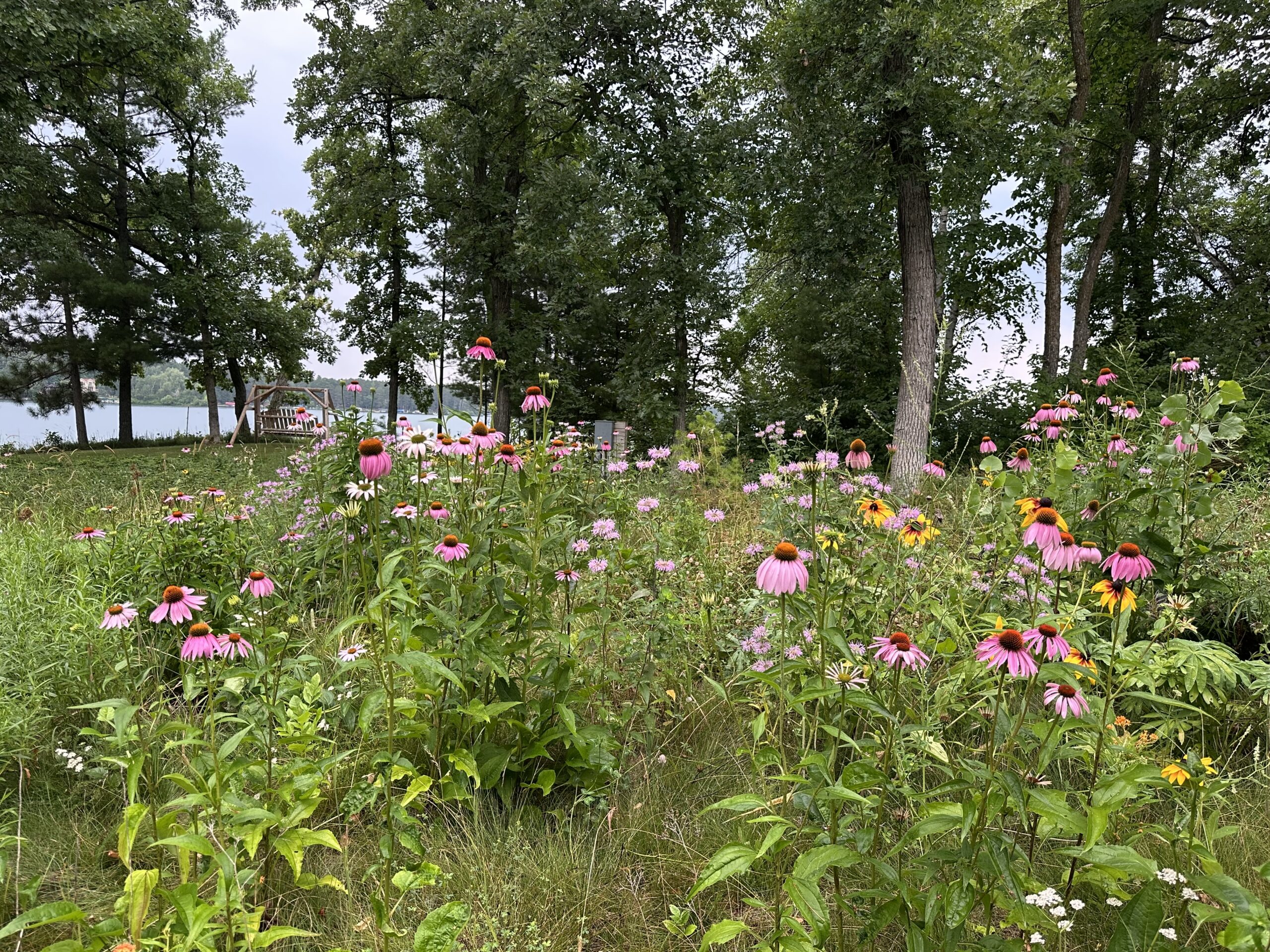
- Protect slopes and bluffs. Maintain native vegetation on slopes and bluffs to reduce erosion. Minnesota DNR guidance recommends maintaining at least a 10-foot buffer of native vegetation at the top of a bluff or using practices such as rain gardens to slow stormwater runoff.
- Maintain a natural shoreline buffer. Minnesota DNR guidance recommends a 25-foot or wider unmowed buffer of native trees, shrubs, grasses, and other vegetation along the shoreline where possible.
- Reduce runoff from developed areas. Preserve native trees, shrubs, and ground cover, minimize unnecessary pavement and turf, and use practices such as rain gardens to capture runoff from roofs, driveways, and lawns.
- Protect aquatic habitat. Maintain aquatic plants and, when practical and permitted, leave fallen trees and branches in the water to provide habitat.
- Maintain septic systems regularly to help prevent nutrients and contaminants from reaching the lake.
- Minimize fertilizer and salt use. When fertilizer is needed, use phosphorus-free fertilizer (P=0) and avoid applying it where it can wash into the lake.
- Manage everyday activities with the lake in mind. Pick up pet waste, keep fire pits away from the shoreline, and dispose of ash properly.
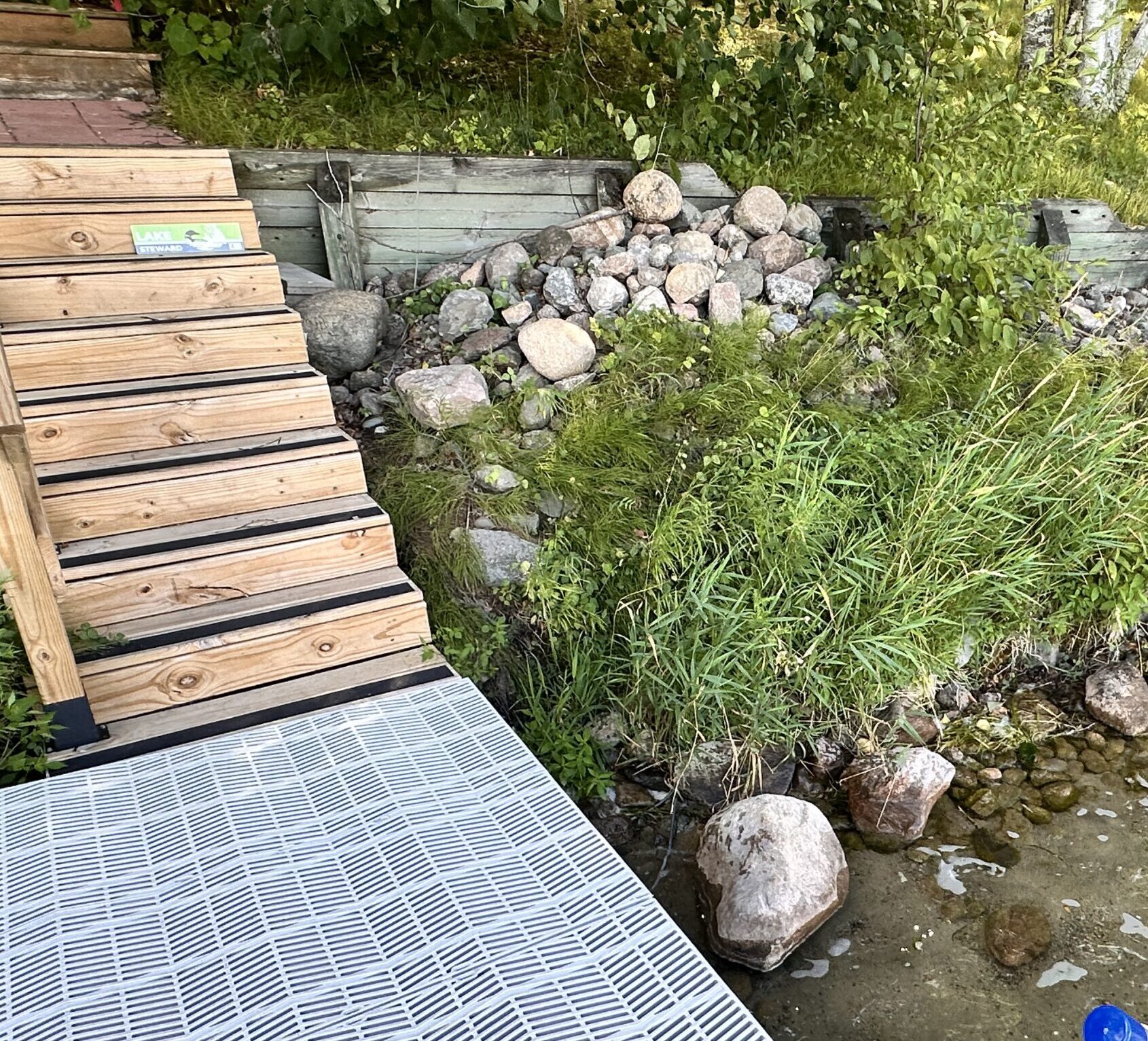
Considering Riprap for Shoreline Protection?
Riprap is sometimes used to protect shorelines from erosion caused by waves, runoff, and ice action, but it is not the best solution for every property. Rock can reflect wave energy, reduce shoreline habitat, and does not filter runoff before it enters the lake.
Natural vegetation, shoreline buffers, and other restoration techniques can often provide erosion protection while also improving water quality and wildlife habitat. In some situations, riprap may still be appropriate as part of a properly designed shoreline stabilization project.
Before installing riprap or making other shoreline alterations, check Hubbard County requirements and consult current Minnesota DNR guidance.
Need help with a shoreline project? The Hubbard County Soil & Water Conservation District (HCSWCD) can provide technical assistance for conservation projects, and cost-share funding may be available for eligible practices such as shoreline buffers and restoration.
Additional Resources
Shoreland Stewardship in Action
Shoreland restoration projects can reduce runoff, protect water quality, preserve natural vegetation, and improve habitat. The Long Lake project below shows how one property addressed runoff before it reached the lake.
A Long Lake family in Neighborhood 2 addressed runoff from their driveway and hillside with a catch basin and two levels of rain gardens. The system captures rainwater, sediment, organic matter, and nutrients before they can flow directly into the lake.

Interested in improving your own shoreline? Visit the Long Lake Stewardship Program to learn about lake-friendly practices and request a complimentary shoreline visit.